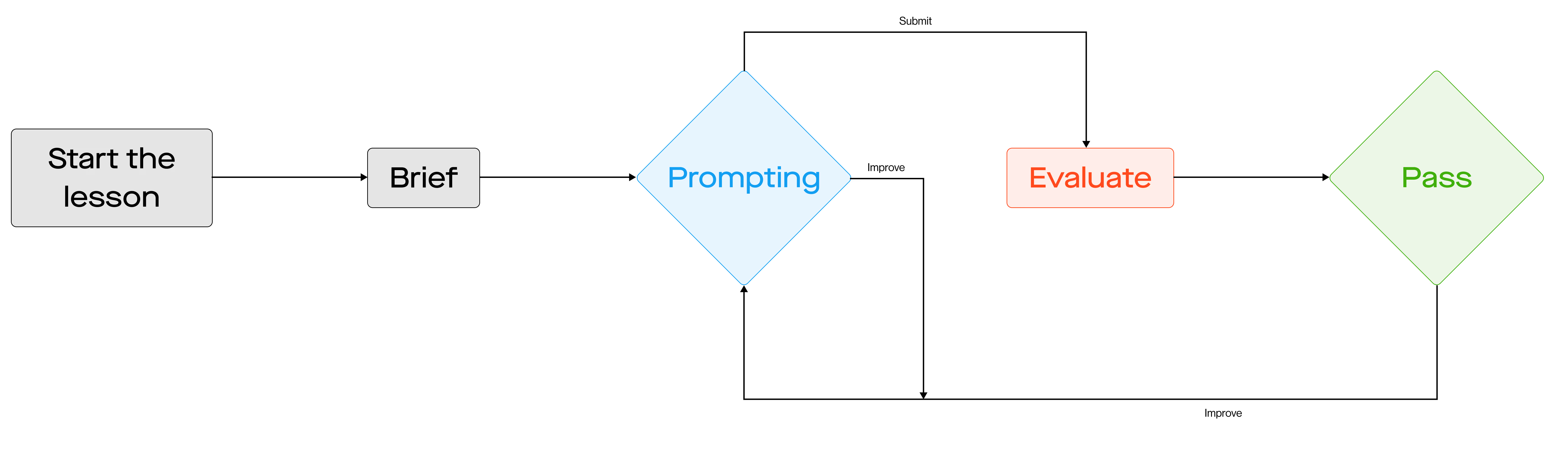
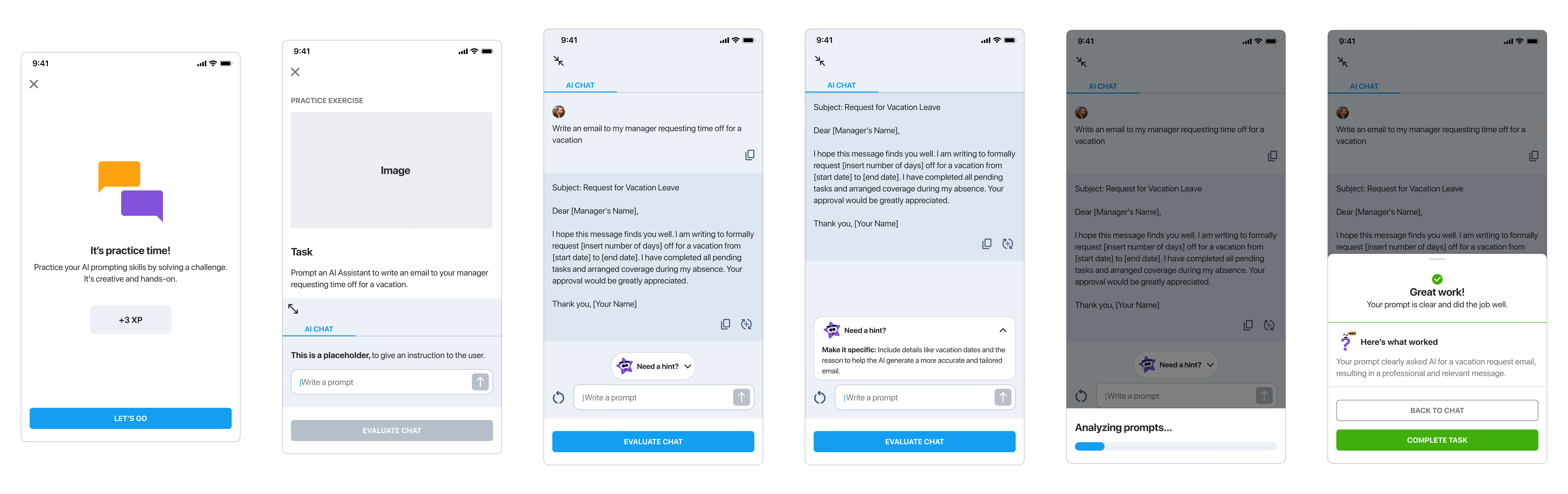
The first call we had to make was evaluation: to evaluate each prompt or the whole conversation. The team went with the second option to give learners play time: they sit in the prompting field, try things, iterate, and decide when they've practiced enough.
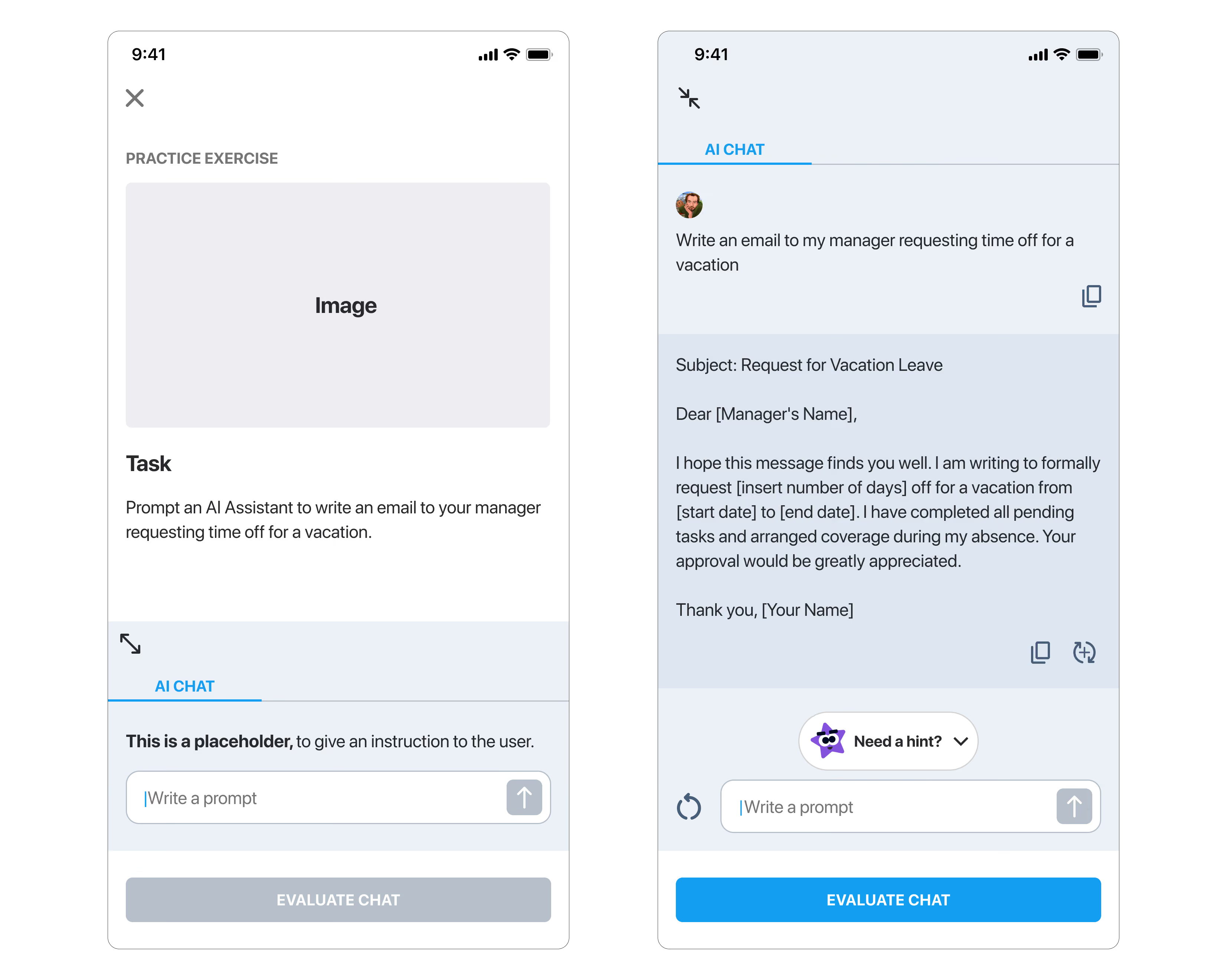
The second call was about feedback itself: to include or to skip. Learners were already prompting AI and if “another” AI provided feedback, two AIs had to be differentiated: the one they prompted and the one that coached them. The team had been ready to drop in-exercise hints entirely and only evaluate the response. But a learner getting no signal mid-exercise would leave with nothing to act on. The move was to place Kodie—already a known character to learners—above the prompt field as a small "Need a hint?" tap. Behind the scenes it was the same model. To the learner, it was a separate voice: the AI you prompt and the coach who watches you prompt it.

The third call was the language of the wrong state. The evaluation had two outcomes: the prompt fulfilled the task or it needed more details (vacation dates missing, tone too casual, intent unclear). Calling the second one "wrong" felt off. So the team used ‘Almost there. Let's see how to make your prompt better’ to indicate inaccuracy and invite iteration without black-and-white judgment.
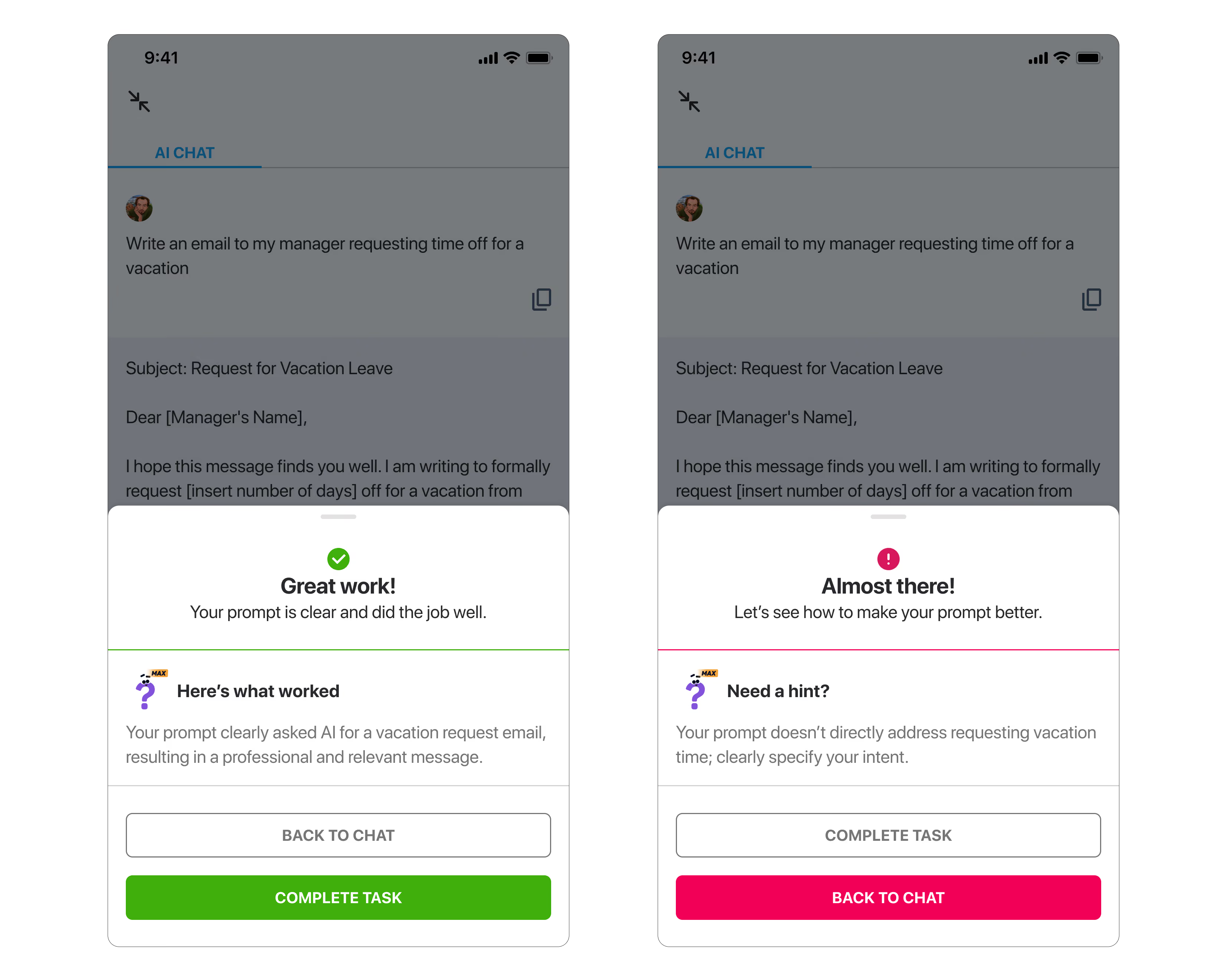
Either way, the learner always had a choice: to complete the assignment without reaching a better answer or to go back and try again.
This kept them in control of an open-ended task that had no natural end and avoided spiraling feedback loops the AI couldn't reliably close on its own.